Writing
Things I love: coffee
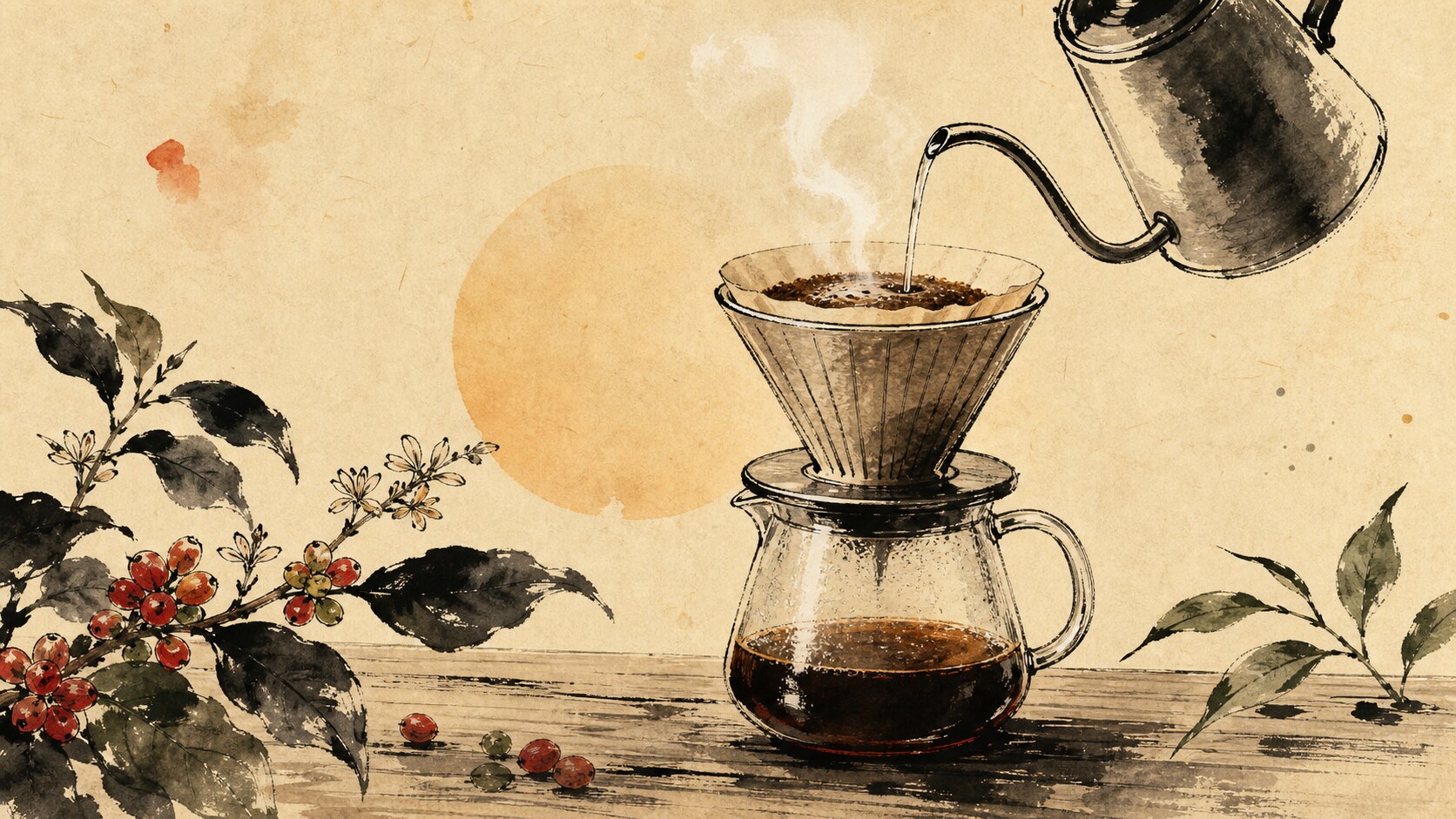
I started drinking coffee because, one warm morning, I wanted to feel like someone who drank coffee.
It was early summer in 2020. I was sitting on the balcony of our apartment in Helsinki, looking out at the trees. The morning was warm and unhurried, and for a moment I could have been on holiday.
In my head, coffee belonged to that scene. I imagined a person sitting outside an apartment in Paris, wearing a dressing gown and taking their time over the morning. I wanted some of that feeling.
I was in my mid-thirties and had never been a coffee drinker.
Growing up in England, tea was the rhythm of home. My parents drank instant coffee, but I never really did. After moving to Finland, I was surrounded by coffee, although none of what I encountered at lunch buffets and conferences made me want to drink it. It was dark, strong and usually burnt. Sometimes it tasted like cigarettes.
But my partner drank coffee, so we had a Moccamaster and some beans at home. I made a filter coffee, added milk and then added a generous amount of sugar. Of course it tasted good. Almost anything has a fighting chance when it contains enough sugar.
Something about it suited the morning. I made another coffee the next day, and then another. Over the following weeks, I gradually used less sugar and began to notice what was underneath it. I had spent years avoiding the taste, and now I wanted to understand it.
Learning what coffee could be
A good friend of mine got me into better coffee. He was already passionate about it and encouraged me to try lighter roasts and espresso.
Years before I drank coffee myself, I had noticed a La Pavoni Europiccola in his apartment. It is a beautiful, old-fashioned lever machine made from polished metal, with most of its workings on show. I did not know what it was like to use, but I knew I liked looking at it.
So I bought one.
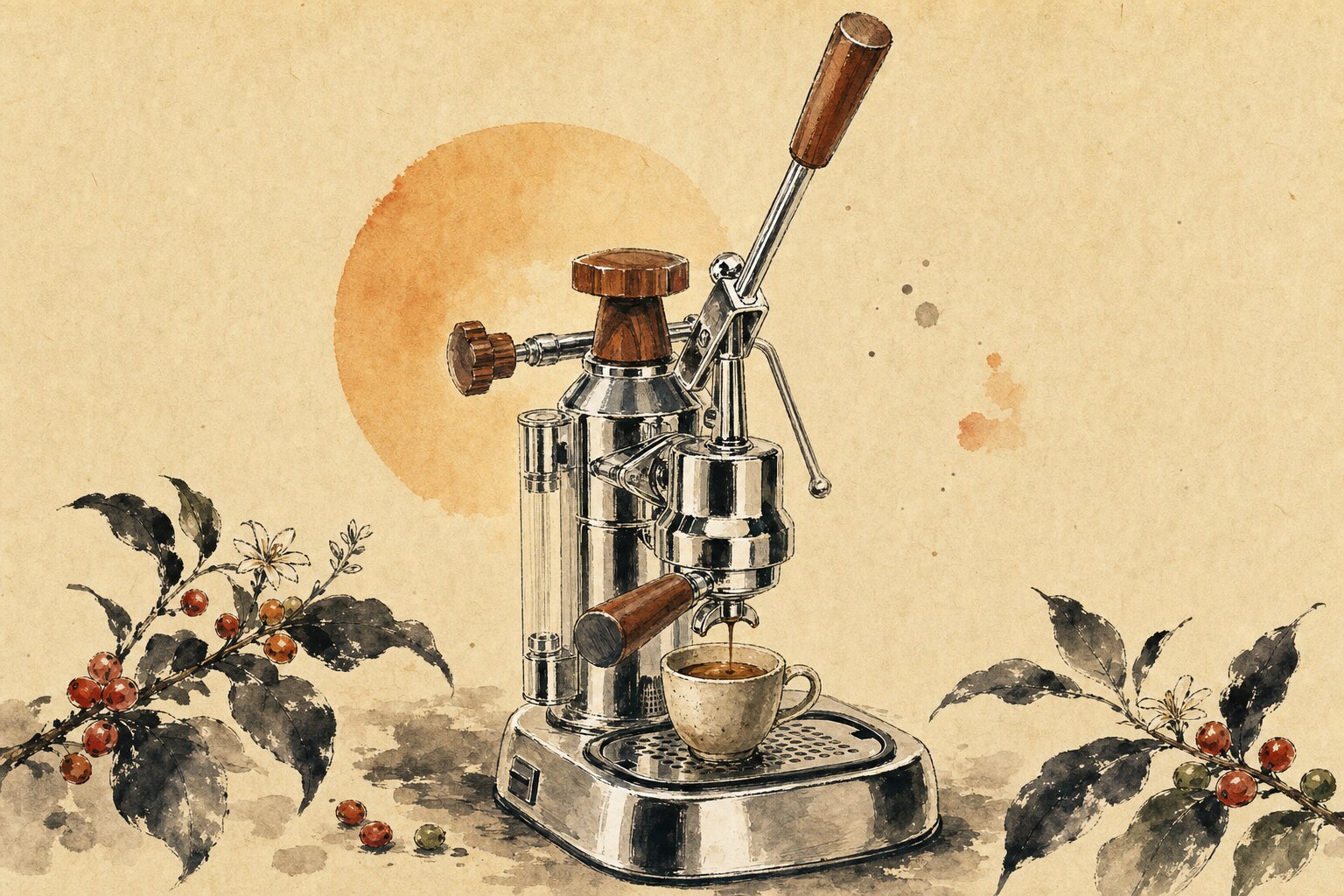
The Europiccola made the process as interesting as the drink. I grind the beans, prepare the coffee, place a cup beneath the group head and pull the lever down by hand. The movement is simple, physical and pleasing. There is no button to hide the difficult parts.
The machine is temperamental and unforgiving. I have to pay attention because a small change in the grind, temperature or technique can turn a promising espresso into a disappointing one.
I have considered buying something more modern. It would make consistency easier, particularly when steaming milk, and my more recent obsession with latte art would be far less frustrating.
But replacing the lever with a button would remove part of what I love. With the Europiccola, making espresso feels like a craft. There is a little romance in having to pull the shot with my own hands, even when the result does not reward the effort.
Most of the time, I use it to make cappuccinos. When everything goes well, the espresso tastes right, the milk has the texture I want and I can pour a rosetta or tulip that survives long enough to be admired before I drink it.
I do not manage that as consistently as I would like, which is probably why it remains satisfying.
The variables
I enjoy coffee for much the same reason I enjoy programming.
Every cup is the end of a long chain of decisions. Coffee cherries are grown and picked, then processed and dried until the green coffee is stable enough to store. Producers decide how and when to remove the fruit, how to manage fermentation and how to dry the coffee. Each choice leaves something behind in the taste. Roasting transforms it again before the beans ever reach my kitchen.
Then the decisions become mine: the grind, the amount of coffee, the temperature of the water, the brewing time and the type of drink I am trying to make.
Change one input and the output changes with it.
In software, we try to understand variables and create functions that produce a predictable result. I take the same approach to coffee. Coffee is less predictable. Beans age. The Europiccola becomes hotter as I use it. My technique changes slightly from one morning to the next. Even when I think I have repeated the process, the result can be different.
With espresso, I am chasing consistency on a machine that makes it difficult.
The frustration and curiosity arrive in almost equal measure. There is always a reason to adjust something, another theory to test and another chance to do it better tomorrow.
Room to explore
I treat pour-over differently. With it, I explore what a new coffee can do and play with the variables.
At Helsinki cafés, I tried lighter roasts that tasted nothing like the bitter, dark coffee I thought I disliked. I began buying different beans for home, and now there is usually something new in the house each month.
I am drawn to coffees that are fruity and sweet. Some beans I enjoyed recently had been co-fermented with strawberries. Another coffee, called Purple Sangria, had been fermented with berries and carried notes of sangria. It was delicate and almost tea-like, but still unmistakably its own thing.
The variety can feel endless. Changing the beans, the process or the recipe can produce an entirely different cup.
Even the vessel matters. I own a Bouba dual-lipped cup with a thinner lip on one side and a thicker one on the other. Drinking the same coffee from each side can bring different notes forward. It sounds like the sort of detail that should not matter until you try it and discover that it does.
For years, I judged coffee by one narrow version of it and decided I disliked the whole thing.
The morning ritual
Most mornings when I am at home, I make a cappuccino.
Before the day gathers momentum, there is a short sequence that belongs only to this: weighing and grinding the beans, preparing the machine, pulling the lever, steaming the milk and deciding whether that morning’s foam has any hope of becoming latte art.
I slow down while I make it. For a few minutes, I pay attention to one small thing, and that gives the morning a shape. Those few minutes ground me.
I also enjoy making coffee for other people. I will admit that I like showing off a little when the latte art works. A rosetta or tulip looks like a flourish added at the end, but it depends on everything before it having gone reasonably well. I like seeing someone’s expression when I place one in front of them.
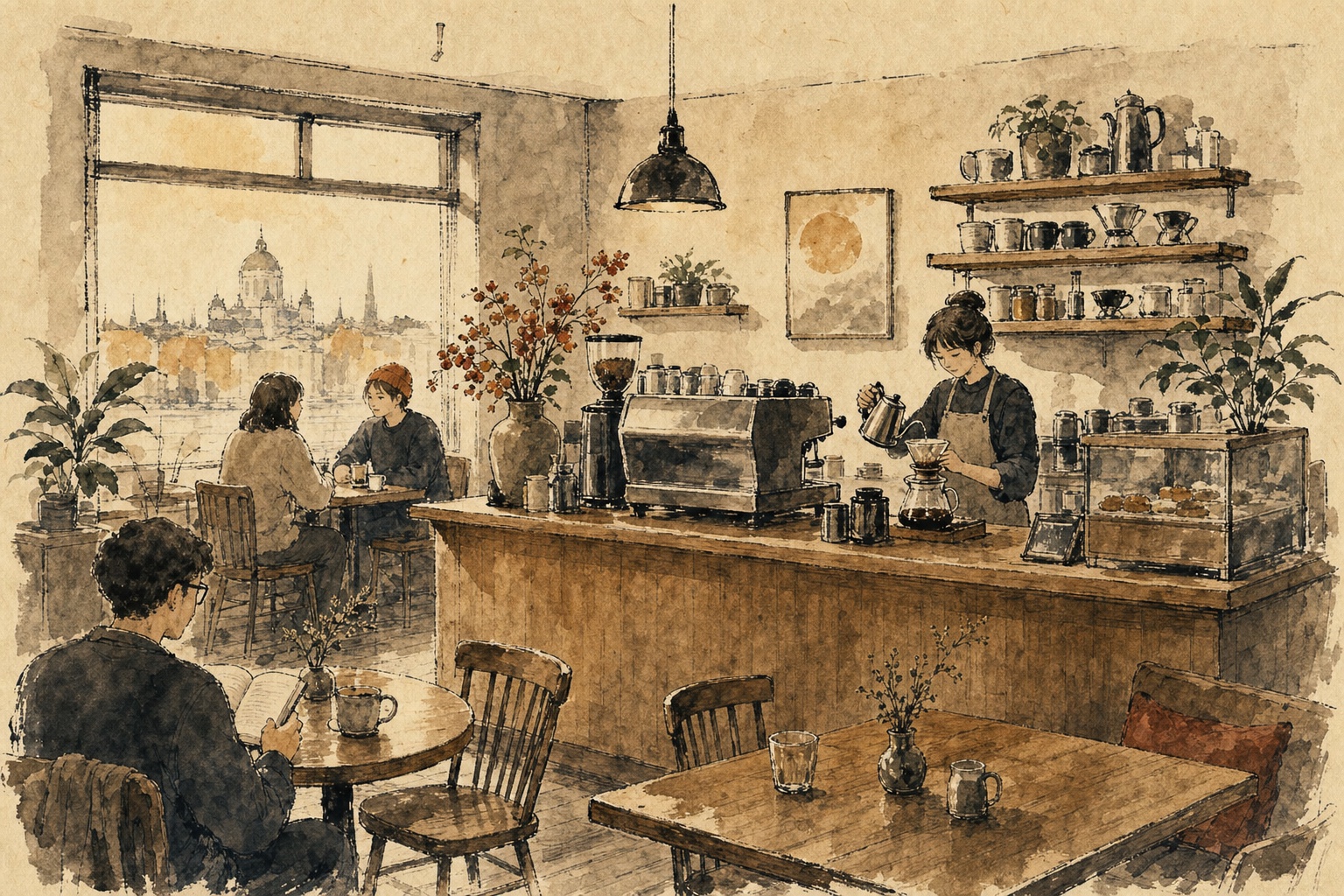
I visit Kahvila Sävy, one of my favourite cafés in Helsinki, at least once a week, usually for breakfast. Over the years, I have come to recognise the baristas and regulars, and often stop to chat. It makes me feel like a small part of the community around the café.
Most mornings, though, it comes back to the Europiccola: grind the beans, prepare the coffee, pull the lever, steam the milk and pour. The espresso is not always right and the tulip often collapses. I drink it anyway, then try again the next morning.